
Key takeaways
- Spider-web swirl marks are thousands of microscopic scratches in the top clear coat — usually caused by automatic brush washes or dry wiping.
- One-step paint correction uses a dual-action (DA) machine polisher and calibrated pad/polish combo to remove haze and light swirls safely.
- Use the fingernail test: if your nail catches cleanly inside a deep scratch, polishing can soften its edges but only touch-up or repainting eliminates it completely.
- Adding one-step paint correction onto a Full Detail or before Ceramic Coating is the single highest-impact visual upgrade you can make.
What swirl marks actually are (and why washing won’t remove them)
Pull a black, navy, or dark red car into direct afternoon sun and you will often see circular “spider-web” halos radiating around the reflection. Those halos are not dried soap or old wax — they are micro-scratches etched into the transparent clear coat that sits over your color basecoat.
Because those microscopic valleys scatter light instead of reflecting it straight back, the paint looks milky, dull, or faded even right after a wash. Wax can temporarily fill a small fraction of them, but only abrasive machine polishing physically levels the clear coat flat again.
One-step paint correction vs. multi-stage compounding
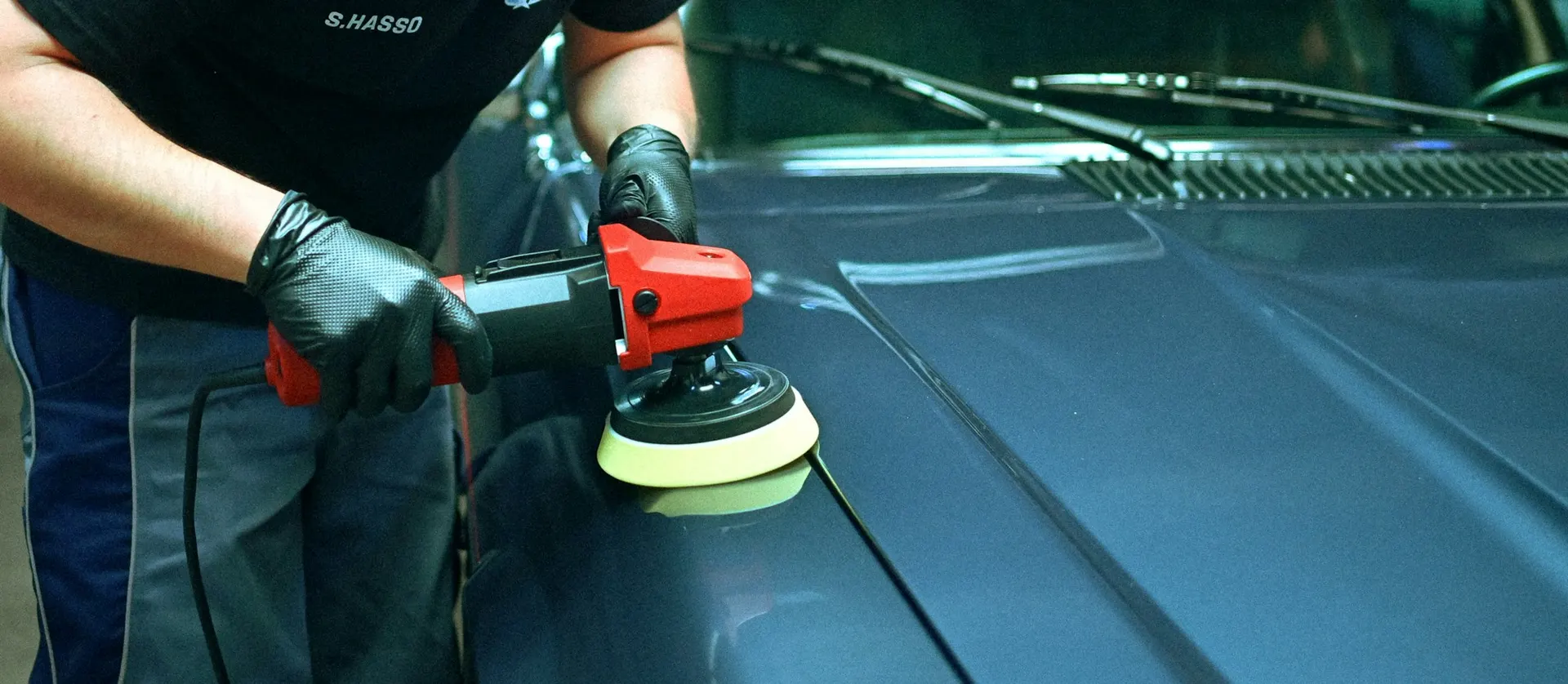
In one-step paint correction, a detailer washes and clay-decontaminates the exterior, then polishes every painted panel with a dual-action (DA) machine polisher. Unlike aggressive old-school rotary buffers that can burn edges if mishandled, a DA polisher orbits and rotates simultaneously to safely remove light-to-moderate swirls, wash marring, and oxidation in 1–2 extra hours.
Multi-stage correction adds heavier cutting passes before refining — typically reserved for show cars or severely neglected clear coat. For 90% of daily drivers, a thorough one-step correction delivers a dramatic jump in clarity and depth at a fraction of the cost and preserves more of your factory clear coat.
The quick fingernail test for scratches
Before booking paint correction, lightly drag the back of your fingernail across any single deep scratch:
- Does NOT catch your nail: The mark sits in the clear coat and is an ideal candidate for machine polishing.
- Slightly catches your nail: One-step correction will typically round off the sharp edges so the scratch looks far less noticeable from standing distance, though it may not vanish 100%.
- Deep groove down to white primer or bare metal: Polishing cannot replace missing paint — that panel needs touch-up paint or a body shop.
Locking in the finish after polishing
Freshly polished clear coat is bare and vulnerable. Immediately after wiping away polishing oils, you should seal the surface — either with a paint sealant for short-term protection or with a Ceramic Coating to lock in that deep, corrected gloss for years.
Related mobile services
Covered towns mentioned in this guide
Common questions
Quick answers.
It typically adds 1 to 2 hours on top of a full wash and decontamination, depending on vehicle size and paint condition.
Yes — in fact, many brand-new dealership cars arrive with wash swirls from lot attendants. A light one-step DA polish safely clears dealership haze without thinning clear coat.
No. Once clear coat has delaminated or peeled off the basecoat, only refinishing at a body shop can repair that panel.
If you plan to keep the vehicle, yes — doing both in the same appointment avoids paying for wash, clay, and prep twice.